
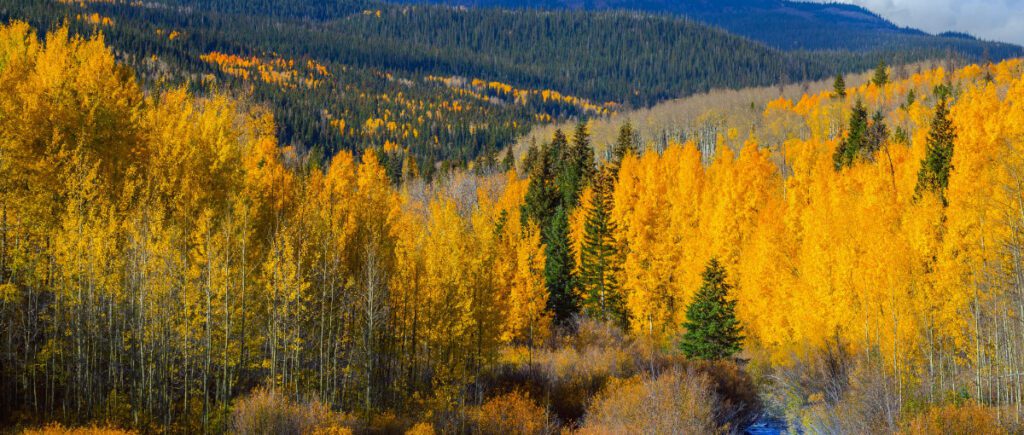
Pando: The Trembling Giant
Pando, the Trembling Giant, is an 80,000-year-old clonal colony of a single quaking aspen tree located in the Fishlake National Forest of South-central Utah. It is considered the world’s oldest living organism, and one of the world’s largest by mass. The single stem of this colony is estimated to weigh over 6,000,000 kilograms, and the root system is estimated to cover an area of over 43 hectares.
The History and Origin of the Trembling Giant
The Trembling Giant is believed to have originated over 80,000 years ago, when a single quaking aspen seedling was planted in the Fishlake National Forest. Over the years, the root system of the single tree has spread and grown to cover an area of over 43 hectares. Since the root system of the colony is interconnected, the entire system is considered to be one organism.
The genetic material of the Trembling Giant is also remarkable. It has been determined that the vast majority of the tree’s stems and trunks all contain the same genetic material, which is a result of vegetative cloning.
The Unique Characteristics of the Trembling Giant
The Trembling Giant has a number of unique characteristics that make it stand out from other trees and organisms. Firstly, it is the largest living organism in the world by mass, and second, it is the oldest living organism in the world.
The root system of the Trembling Giant is also remarkable. It is estimated to cover an area of 43 hectares and its root system is interconnected, which allows the entire colony to act as one organism. In addition to this, the root system of the Trembling Giant is incredibly deep and extensive, which allows it to take in a large amount of nutrients and water from the surrounding soil.
The Environmental Impact of the Trembling Giant
The Trembling Giant has had a significant environmental impact on the surrounding area. It has been found to increase the amount of water in the soil, which in turn helps to increase the fertility of the soil and encourages the growth of other vegetation in the area.
In addition to this, the Trembling Giant also acts as a natural filter for the water in the area. Its root system is able to absorb pollutants and contaminants from the water, which helps to keep the water clean and safe for local wildlife.
The Future of the Trembling Giant
Despite its age, the Trembling Giant is still in good health and is expected to live for many more years to come. However, the future of the Trembling Giant is uncertain due to the threat of climate change and human activity.
Climate change has the potential to significantly alter the environment in which the Trembling Giant lives, which could have a negative effect on its health and wellbeing. In addition to this, human activity in the area could also be damaging to the Trembling Giant, as activities such as logging and cattle grazing can disturb the root system of the colony.
Conclusion
The Trembling Giant is an incredible and unique organism that is estimated to be over 80,000 years old. It is the oldest and largest living organism in the world by mass, and its root system covers an area of over 43 hectares. The Trembling Giant also has a significant environmental impact on the surrounding area, and its future is uncertain due to the threat of climate change and human activity.