
Introduction
Constitution Hill is an iconic landmark in South Africa and a symbol of the nation’s journey to democracy. Located at the foot of the hill in Johannesburg, the site has a rich, complex history spanning centuries and its story is deeply entwined with South Africa’s struggle for freedom and equality. From political prisoners to President Nelson Mandela, Constitution Hill has played a pivotal role in the country’s struggles for democracy, civil rights, and justice. This article will explore the history of Constitution Hill, the attractions available for visitors, and the important legacy it leaves behind.
History of Constitution Hill
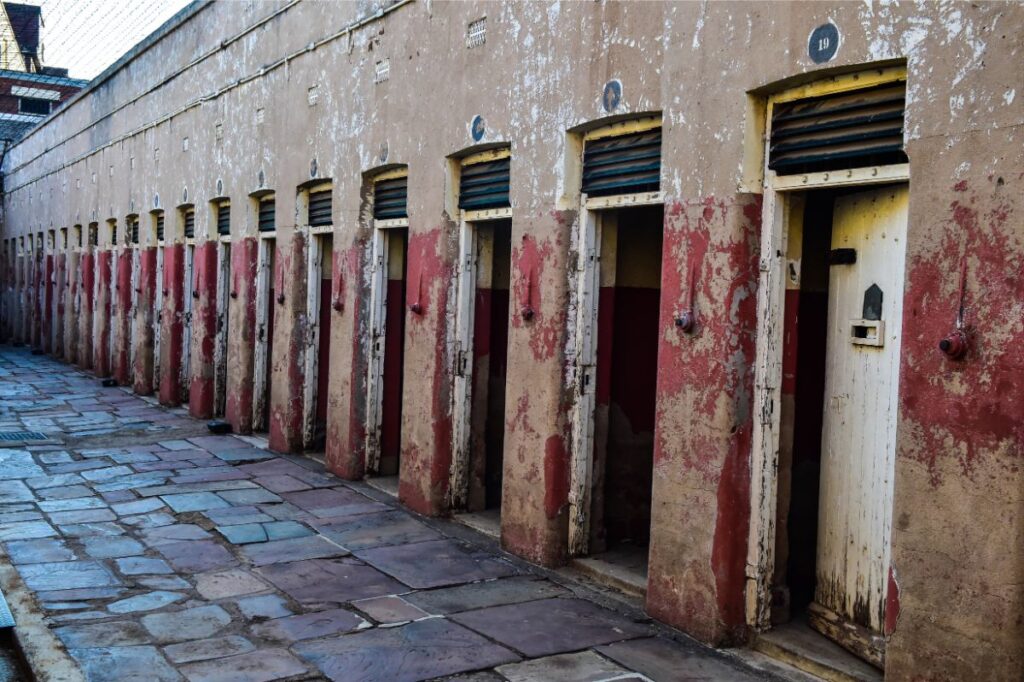
Constitution Hill is a national heritage site and has a fascinating history that dates back to 1892. It was originally built as a fort and housed a prison complex where political prisoners were held during the Apartheid regime. During this time, the site was known as ‘Number Four’ and was used to detain and torture political activists. Among the most famous inmates were Mahatma Gandhi, Nelson Mandela, and Winnie Mandela.
After the end of Apartheid in 1994, the site was redeveloped as a museum and memorial to the struggle for freedom. It was renamed Constitution Hill in 1996 after the adoption of the South African Constitution which established a multi-party democracy in the country. Today, the site stands as a symbol of South Africa’s journey to freedom and democracy.
Attractions at Constitution Hill
Constitution Hill is home to a number of attractions that commemorate the site’s history and the struggle for freedom. One of the most popular attractions is the Old Fort, which was built in 1892 and served as the prison complex during the Apartheid era. Visitors can take a guided tour of the Old Fort and learn about the history of the site, including the stories of those who were incarcerated there.
The Constitutional Court is another popular attraction at Constitution Hill. This is the highest court in South Africa and visitors can take a guided tour to learn about the court’s history and its role in safeguarding democracy in the country.
The Women’s Gaol is another important attraction at Constitution Hill. This is where female political prisoners were held during the Apartheid era and visitors can take a tour to learn about the women’s struggles and their fight for freedom.
The Nelson Mandela Capture Site is another popular attraction at Constitution Hill. This is the place where Nelson Mandela was captured in 1962 and visitors can take a tour to learn about the event and its significance in the struggle for freedom.
Legacy of Constitution Hill
Constitution Hill is an iconic landmark in South Africa and a symbol of the nation’s journey to democracy. The site’s history is deeply entwined with the struggle for freedom and justice and it stands as a reminder of the country’s journey to democracy. Constitution Hill is an important national heritage site and a testament to the resilience of the South African people in their fight for freedom and equality.
Conclusion
Constitution Hill is an iconic landmark in South Africa and a symbol of the nation’s journey to democracy. The site has a rich, complex history spanning centuries and its story is deeply entwined with South Africa’s struggle for freedom and justice. From political prisoners to President Nelson Mandela, Constitution Hill has played a pivotal role in the country’s struggles for democracy, civil rights, and justice. Visitors can explore the attractions at Constitution Hill to learn more about the site’s history and the legacy it leaves behind.