
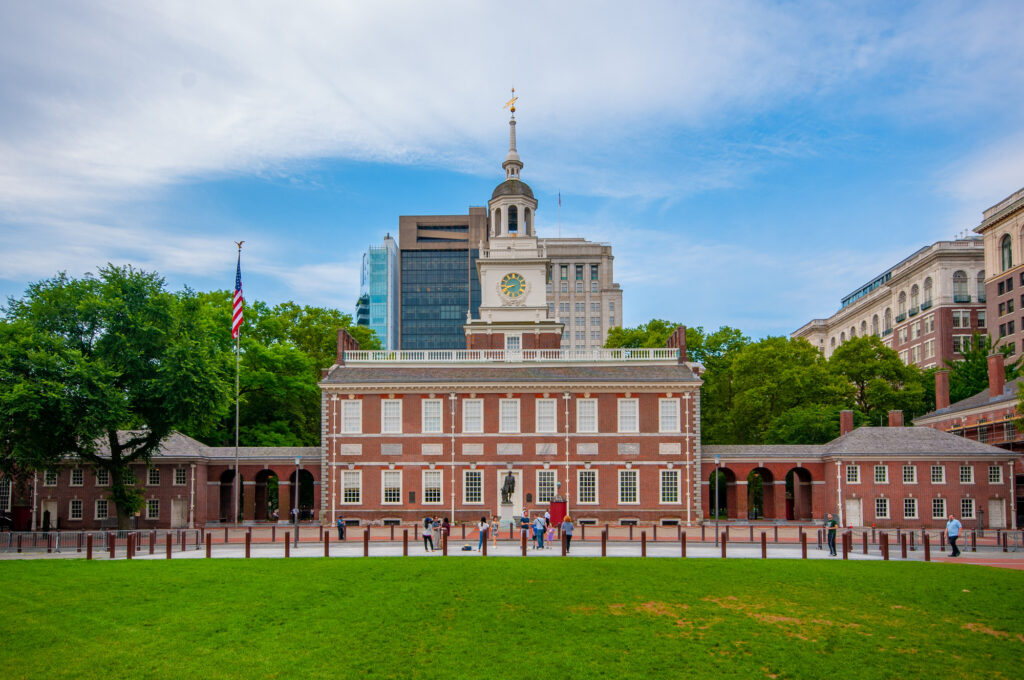
Independence Hall: Uncover the History of America’s Birthplace
Independence Hall is a National Historical Park located in Philadelphia, Pennsylvania. It is the birthplace of the United States of America, where the Declaration of Independence was adopted on July 4, 1776, and the United States Constitution was signed in 1787. This iconic landmark has been a symbol of freedom and democracy for centuries and is a must-see attraction for anyone interested in American history.
Introduction to Independence Hall
Independence Hall is the centerpiece of the Independence National Historical Park in Philadelphia, Pennsylvania. The building was constructed in 1732 as the Pennsylvania State House and served as the meeting place of the Second Continental Congress, which declared America’s independence from Great Britain on July 4, 1776. It was also the site of the Constitutional Convention in 1787, during which the United States Constitution was written and signed.
The building is considered one of the most important historical sites in the United States and is a designated UNESCO World Heritage Site. It is the centerpiece of the Independence National Historical Park, which is made up of several other historic sites, including the Liberty Bell Center, the Benjamin Franklin Museum, and the President’s House.
History of Independence Hall
The Pennsylvania State House, now known as Independence Hall, was constructed in 1732 to serve as the meeting place of the Pennsylvania Assembly. The building was designed by Andrew Hamilton and Edmund Woolley and is considered an example of Georgian-style architecture.
In 1775, the Second Continental Congress met in the State House and began the process of declaring independence from Great Britain. On July 4, 1776, the Declaration of Independence was adopted in the Assembly Room of the State House and the Liberty Bell was rung to announce the news.
The Constitutional Convention was held in the Assembly Room in 1787 and the United States Constitution was written and signed in this space. After the signing of the Constitution, the building was renamed Independence Hall.
What to See at Independence Hall
Independence Hall is open to the public and offers guided tours of the Assembly Room, the Governor’s Council Chamber, and the Supreme Court Chamber. Visitors can also explore the Liberty Bell Center, which features the iconic bell and displays about its history. The Benjamin Franklin Museum is also located in the park and features interactive exhibits about the life and work of Benjamin Franklin.
The President’s House site is located nearby and features memorials to honor the nine enslaved African Americans who lived and worked in the house during George Washington’s presidency. Other sites in the park include the First and Second Banks of the United States, Carpenters’ Hall, and the Tomb of the Unknown Soldier of the Revolution.
How to Visit Independence Hall
Independence Hall is located in the Independence National Historical Park in Philadelphia, Pennsylvania. The park is open daily from 9:00 am – 5:00 pm and admission is free. Guided tours of the building are available and tickets can be purchased online or at the ticket office on the day of the tour.
Visitors can also explore the Liberty Bell Center and the other historic sites in the park. The Benjamin Franklin Museum is open from 9:00 am – 4:00 pm and tickets are available for purchase online.
Experience the Birthplace of America
Independence Hall is one of the most significant historical sites in the United States. Visitors to the park can learn about the events that led to the nation’s independence and explore the Liberty Bell Center, Benjamin Franklin Museum, and other historic sites. It is a must-see destination for anyone interested in American history and a remarkable experience for those wanting to stand in the very rooms where the Declaration of Independence and the U.S. Constitution were debated and adopted. With its rich history, iconic architecture, and cultural significance, Independence Hall stands as a symbol of America’s birthplace and the enduring ideals of freedom and democracy.