
Introduction
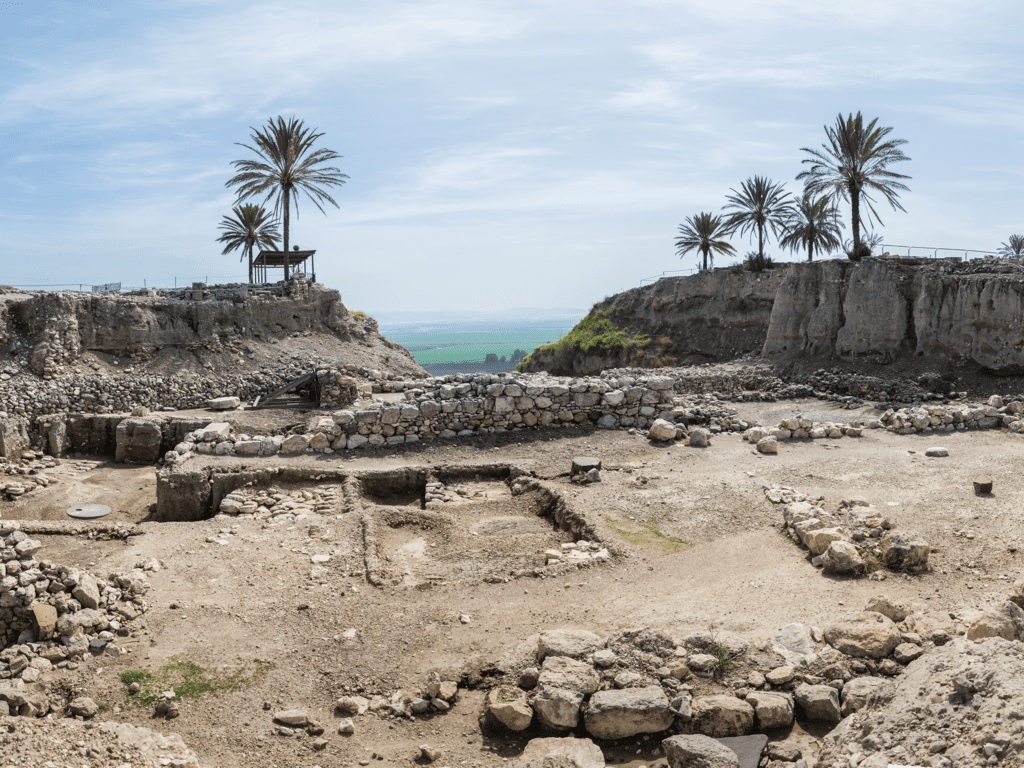
Tel Megiddo, an ancient mound located in the Jezreel Valley of northern Israel, is an archaeological site that has been in continuous use for the past 5,000 years. From the Canaanites to the Romans, the site has played a significant role in the history of the region. Today, Tel Megiddo is a popular tourist destination for those interested in the history and archaeology of the Middle East.
About Tel Megiddo
Tel Megiddo is a mound, or tell, composed of centuries of human habitation. It is estimated that the site was first settled around the 4th millennium BCE, and was an important center of Canaanite and Israelite culture. During the 12th century BCE, the site was the capital of King Solomon’s kingdom, and was subsequently conquered by the Assyrians, Babylonians, and Persians. In the 4th century BCE, the site was conquered by Alexander the Great and continued to play an important role in the region until the 1st century CE, when the Roman Empire took control of the area.
Archaeological Exploration of Tel Megiddo
Tel Megiddo has been the subject of numerous archaeological excavations since the early 19th century. In 1925, the Oriental Institute of the University of Chicago began a long-term excavation of the site, which yielded important discoveries about the history of the area. The most significant of these discoveries was the uncovering of a large palace complex built by King Solomon, which revealed much about the economic and political structure of the kingdom. In addition, the excavations uncovered a number of other important features, including the remains of a Canaanite temple, an Assyrian palace, and a large water system.
In the late 20th century, Tel Megiddo was declared a UNESCO World Heritage Site, and the site is now open to the public. Visitors to the site can explore the ruins of the ancient city, as well as the remains of the various civilizations that inhabited the area.
What To See at Tel Megiddo
Tel Megiddo is home to a number of remarkable archaeological features, including the remains of the ancient city walls, the main gates, and a number of royal buildings. The site also contains the remains of several important religious structures, including the Canaanite temple and the Assyrian palace. Additionally, visitors can also explore the remains of the large water system, which provided the city with fresh water.
In addition to the archaeological features, the site also contains several other important features, including a visitors’ center, a museum, and a café. The visitors’ center provides information and tours of the site, while the museum contains a variety of artifacts and information about the history of the area.
Conclusion
Tel Megiddo is an important archaeological site that has been in continuous use for the past 5,000 years. From the Canaanites to the Romans, the site has played a significant role in the history of the region. Today, the site is a popular tourist destination for those interested in the history and archaeology of the Middle East. Visitors to the site can explore the ruins of the ancient city, as well as the remains of the various civilizations that inhabited the area, including the remains of the ancient city walls, the main gates, and a number of royal buildings. The site also contains a visitors’ center, a museum, and a café. Tel Megiddo is an experience that should not be missed for anyone interested in the history and archaeology of the Middle East.