
Naqsh-e Rustam, Iran: A Legacy of Ancient Persian Monuments – Overview
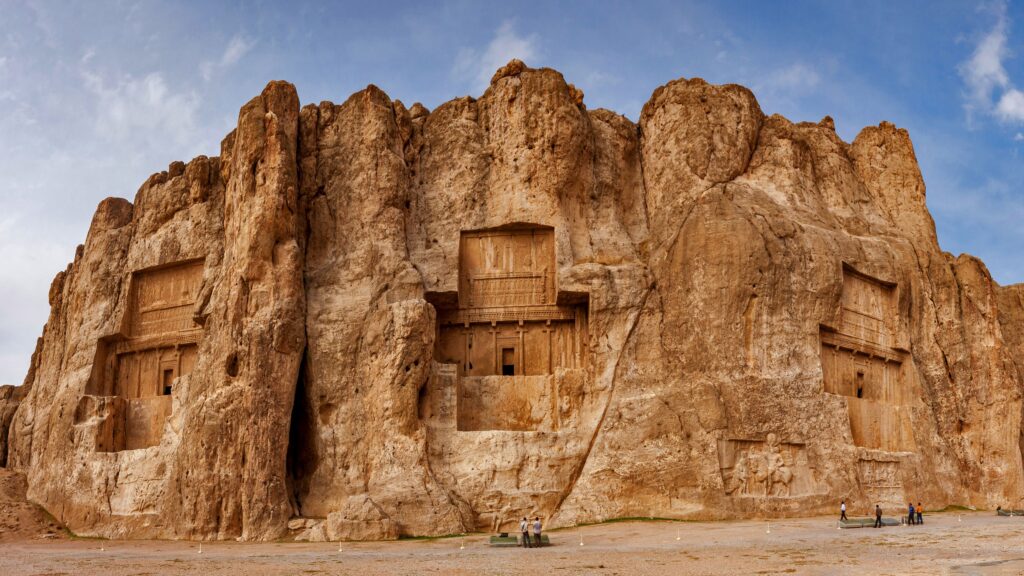
Naqsh-e Rustam, located in the Fars province of Iran, is an archaeological site that features a number of ancient monuments. The site’s main attractions are four tombs dating back to the Achaemenid era, the oldest of which is believed to be that of Darius I, the King of Persia. The site also features a bas-relief of Darius I and his troops, as well as the remains of a Sasanian-era palace. Naqsh-e Rustam is one of the most important archaeological sites in Iran and is a must-visit for anyone looking to explore the country’s ancient Persian heritage.
History
Naqsh-e Rustam is believed to have been built during the Achaemenid era, between the 6th and 4th centuries BC. The site is made up of four tombs, the oldest of which is believed to be that of Darius I, the King of Persia. The other tombs are believed to be those of his son Xerxes I, his grandson Artaxerxes I, and his great-grandson Darius II. The tombs are carved into a cliff face and feature elaborate reliefs depicting the kings and their armies. In addition to the tombs, the site also features the remains of a Sasanian-era palace.
Attractions
The most popular attraction at Naqsh-e Rustam is the four Achaemenid tombs. The tombs feature a number of intricate reliefs depicting the kings and their armies, as well as scenes from battles and religious ceremonies. The most impressive of the tombs is believed to be that of Darius I, which features a large bas-relief of the king and his troops. The other tombs also feature impressive reliefs, though they are not as well-preserved as Darius I’s.
Another attraction at Naqsh-e Rustam is the remains of a Sasanian-era palace. The palace was built in the 6th century AD and was once the home of the Sasanian kings. The palace features elaborate reliefs depicting scenes from Persian mythology, as well as some of the kings and their court. The remains of the palace are a fascinating glimpse into the opulent lifestyle of the Sasanian kings.
Visiting Naqsh-e Rustam
Naqsh-e Rustam is located in the Fars province of Iran, about 40 km north of Shiraz. The site is open to visitors daily from 8 am to 6 pm, and admission is free. Visitors should be aware that the site is exposed to the elements, so it is advised to wear appropriate clothing and bring sunscreen and a hat.
Conclusion
Naqsh-e Rustam is one of Iran’s most important archaeological sites and is a must-visit for anyone looking to explore the country’s ancient Persian heritage. The site features four Achaemenid tombs, one of which is believed to be that of Darius I, the King of Persia. The tombs feature intricate reliefs depicting the kings and their armies, as well as scenes from battles and religious ceremonies. The site also features the remains of a Sasanian-era palace, providing a fascinating glimpse into the opulent lifestyle of the Sasanian kings. Naqsh-e Rustam is open to visitors daily from 8 am to 6 pm and admission is free.